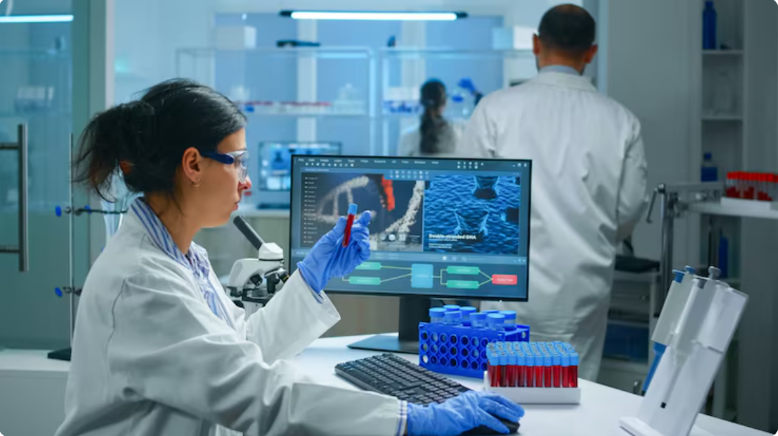
The global healthcare industry continues to evolve rapidly as technology, research, and scientific discovery reshape modern medicine. Countries and organizations around the world are investing heavily in healthcare advancement to improve patient outcomes, support medical professionals, and develop safer treatment solutions.
Today, every successful https://www.genesismedtech.com/ plays a critical role in accelerating healthcare progress by combining scientific expertise, advanced technology, and collaborative research. These centers drive the development of new medical devices, digital healthcare systems, surgical technologies, and treatment methods that improve healthcare delivery worldwide.
As demand for advanced healthcare solutions continues to rise, research and innovation hubs are becoming increasingly important in shaping the future of global medicine.
The Growing Importance of Medical Research
Healthcare challenges continue to increase due to aging populations, chronic diseases, and rising expectations for better patient care. Medical research allows healthcare organizations to develop smarter technologies and more effective treatment methods that can address these evolving needs.
Research and development activities support the creation of advanced diagnostic tools, minimally invasive surgical systems, robotic technologies, and artificial intelligence platforms that improve medical accuracy and efficiency.
Innovation also helps healthcare providers reduce treatment risks, improve recovery times, and enhance patient experiences. By investing in scientific research, healthcare organizations can continuously improve the quality and accessibility of medical care.
Modern healthcare depends heavily on continuous innovation to respond to emerging health challenges and improve long-term patient outcomes.
Collaboration Driving Healthcare Advancement
One of the key strengths of modern healthcare research centers is collaboration. Universities, hospitals, biotechnology firms, and medical technology companies often work together to accelerate innovation and share expertise.
Collaborative environments encourage faster development of advanced healthcare solutions and allow researchers to combine knowledge across multiple scientific disciplines. Engineers, surgeons, scientists, and healthcare professionals contribute unique perspectives that help improve medical technologies and treatment systems.
These partnerships also support clinical trials, product testing, and healthcare training programs that strengthen the overall healthcare ecosystem.
International collaboration has become increasingly important as healthcare organizations work together to address global medical challenges and improve healthcare accessibility.
Advancements in Healthcare Technology
Medical technology is transforming healthcare delivery across hospitals and treatment centers worldwide. Research-driven innovation continues to improve diagnostics, imaging systems, robotic-assisted surgery, patient monitoring, and digital healthcare platforms.
Artificial intelligence is playing a growing role in healthcare by supporting faster data analysis, improved disease detection, and personalized treatment planning. AI-powered systems help healthcare professionals make more accurate clinical decisions while improving operational efficiency.
Robotic-assisted surgical systems are also becoming more advanced, allowing surgeons to perform complex procedures with greater precision and control. These technologies support minimally invasive surgery, which often results in shorter recovery times and reduced patient discomfort.
Wearable healthcare devices and remote patient monitoring systems are further improving healthcare accessibility and long-term patient management.
Supporting the Growth of Digital Healthcare
Digital transformation is changing the healthcare industry by improving connectivity, efficiency, and patient care management. Healthcare organizations are adopting cloud-based systems, electronic medical records, and smart healthcare platforms to modernize operations.
Research centers are actively developing technologies that improve communication between healthcare providers and patients while optimizing hospital workflows. Digital healthcare tools allow medical professionals to access patient information quickly and support faster treatment decisions.
Telemedicine services and remote healthcare technologies have also expanded significantly, increasing access to medical care in underserved regions.
As digital healthcare adoption continues to grow, innovation centers will remain essential in developing advanced systems that improve healthcare delivery globally.
Economic and Global Healthcare Impact
Medical research and innovation contribute not only to healthcare improvement but also to economic growth and technological development. Countries that invest heavily in healthcare research often become global leaders in biotechnology, pharmaceuticals, and medical device manufacturing.
Innovation hubs attract international healthcare organizations, investors, and skilled professionals, creating strong ecosystems for long-term economic growth and scientific advancement.
The development of advanced healthcare technologies also helps strengthen healthcare infrastructure and improve medical access across global markets.
Healthcare innovation plays an important role in improving public health while supporting sustainable economic progress.
Focus on Quality, Safety, and Regulation
Patient safety and healthcare quality remain top priorities in medical research and product development. Healthcare technologies must undergo extensive testing and meet strict international regulations before they can be introduced into clinical environments.
Research organizations invest heavily in quality assurance, clinical evaluations, and product validation to ensure healthcare solutions are safe and effective for patient use.
Healthcare professionals also receive specialized training to operate advanced technologies properly and maintain high standards of clinical care.
Strong regulatory frameworks and continuous product improvement help maintain trust in modern healthcare systems and medical technologies.
The Future of Medical Innovation
The future of healthcare will continue to be shaped by scientific discovery, automation, and digital integration. Emerging technologies such as artificial intelligence, precision medicine, genomic research, and robotic systems are expected to transform patient care even further.
Research centers are increasingly focusing on personalized healthcare solutions designed to meet individual patient needs more effectively. Data-driven technologies and predictive healthcare systems will likely improve early diagnosis and treatment planning in the coming years.
Sustainable healthcare innovation will also become more important as healthcare providers seek environmentally responsible solutions and efficient medical systems.
As healthcare technology evolves, research and development hubs will remain central to advancing medical science and improving healthcare accessibility worldwide.
Conclusion
Modern healthcare continues to advance through scientific research, technological innovation, and global collaboration. Every successful medical innovation and R&D hub contributes to the development of advanced healthcare solutions that improve patient care, surgical precision, and healthcare efficiency worldwide.
As healthcare systems continue embracing digital transformation and next-generation medical technologies, research and innovation centers will remain essential in shaping the future of global medicine. With ongoing investment in science, technology, and patient safety, these hubs will continue driving healthcare progress for years to come.